
कुंभ
Nashik Kumbh Mela 2027
Your complete companion for Nashik Kumbh — places, events, Snan timings, travel, alerts and more.
Nashik Kumbh Mela is held across Nashik and Trimbakeshwar in Maharashtra. It is one of the four traditional Kumbh locations in India. People come here for the religious ceremonies, sacred baths, and traditions associated with the Kumbh.
The event brings together pilgrims, saints, ascetics, and visitors. It is deeply connected to the Godavari river, which flows through both Nashik and Trimbakeshwar.
What is Nashik Kumbh Mela?
The word Kumbh means "pitcher" or "pot," and Mela means "fair" or "gathering." Nashik's Kumbh is specifically called Simhastha because of its astronomical timing.
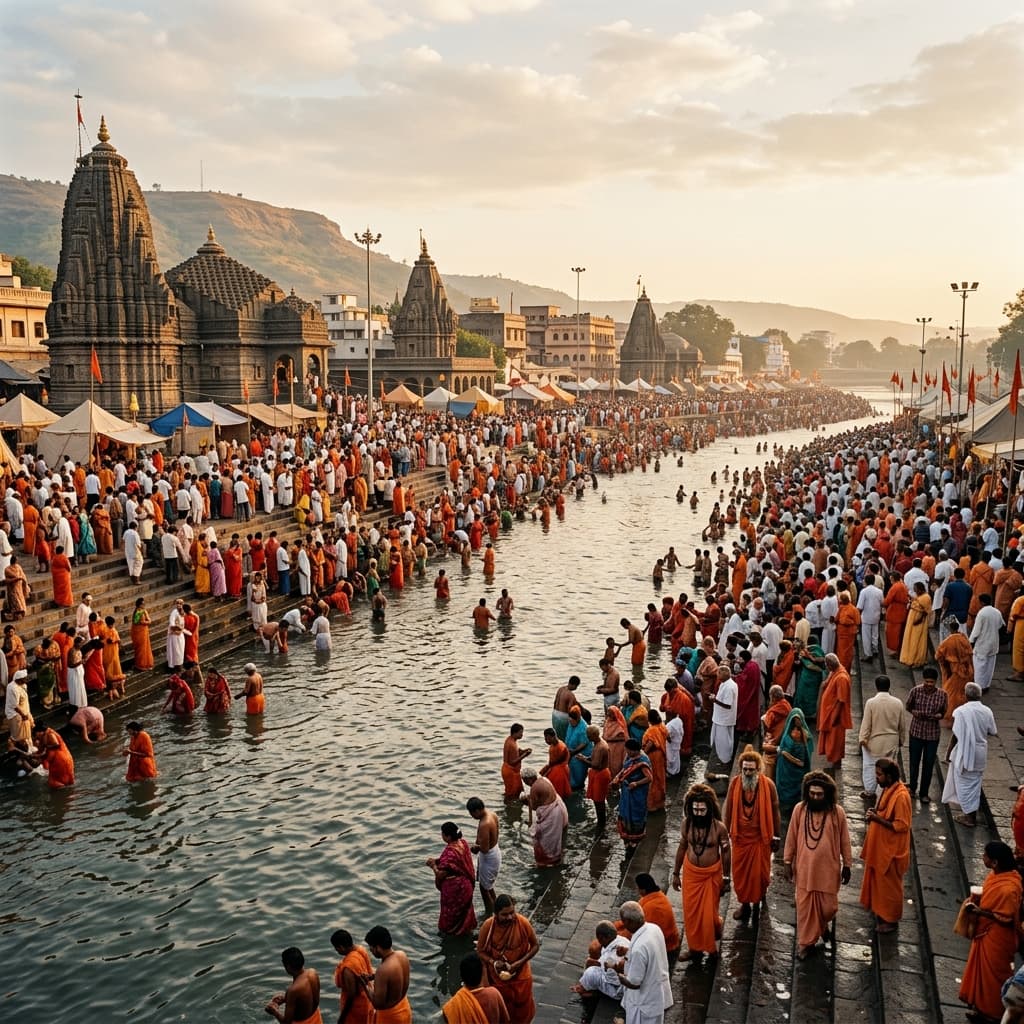
The religious importance of this gathering is tied to the Godavari. According to Hindu tradition, taking a holy dip (snan) in the sacred waters during this period is believed to cleanse a person of their sins.
Why Nashik?
The Kumbh Mela rotates across four cities in India: Prayagraj, Haridwar, Ujjain, and Nashik-Trimbakeshwar. The traditional connection between Nashik and the Kumbh is defined by the Godavari river and the region's spiritual history.
Because the gathering follows a 12-year astronomical cycle, Nashik hosts this event only once every dozen years.
Why is it called Simhastha?
Nashik's Kumbh Mela is uniquely known as Simhastha. According to traditional Indian astronomy, the event takes place when the planet Jupiter (known as Guru or Brihaspati) enters the zodiac sign of Leo, which is called Simha in Sanskrit.
This specific alignment dictates the schedule of the gathering in Nashik.
Nashik and Trimbakeshwar
Nashik
- Panchavati
- Ramkund
- Godavari
- Vaishnava traditions
Trimbakeshwar
- Trimbakeshwar Temple
- Kushavarta Kund
- Brahmagiri
- Shaiva traditions
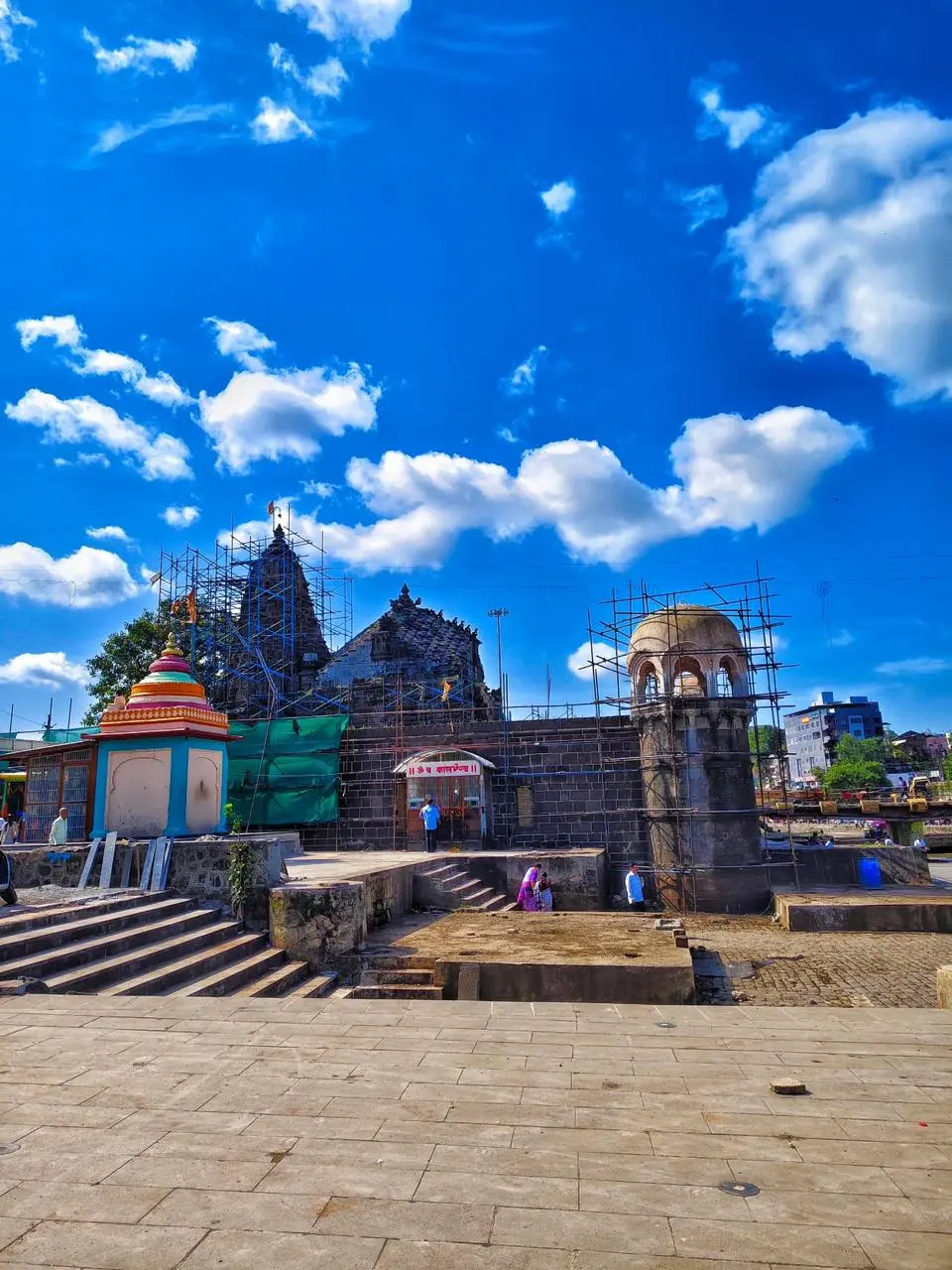
Unlike the other Kumbh Melas, the Simhastha Kumbh Mela at Nashik is not a single-city event. It features two distinct sacred centres separated by about 30 kilometres. The ceremonies and bathing rituals take place simultaneously in both locations, each catering to different traditions.
Ramkund and Panchavati
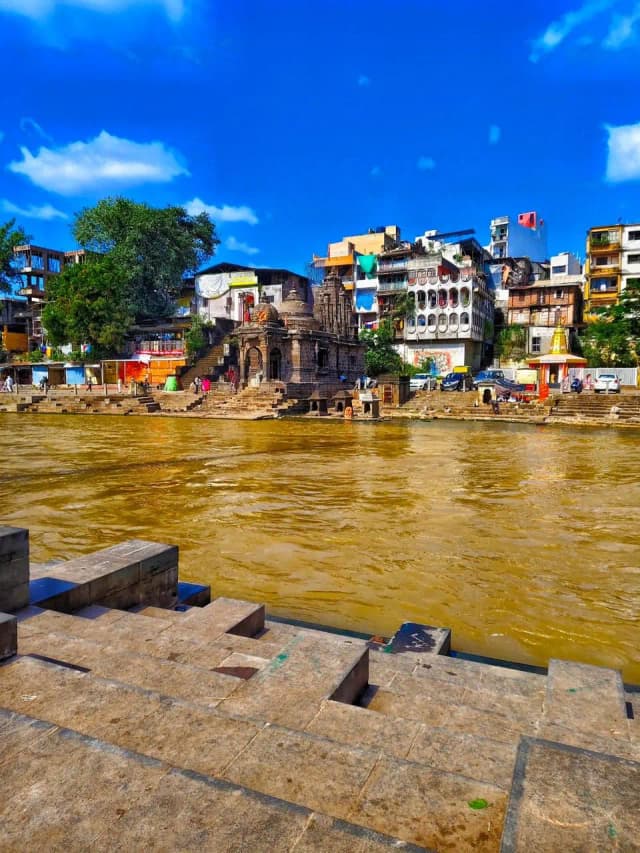
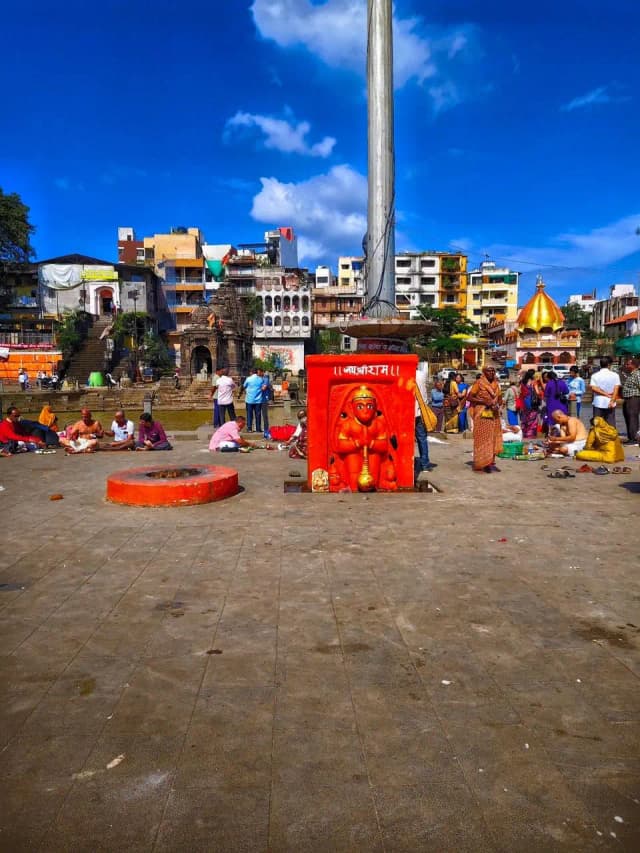
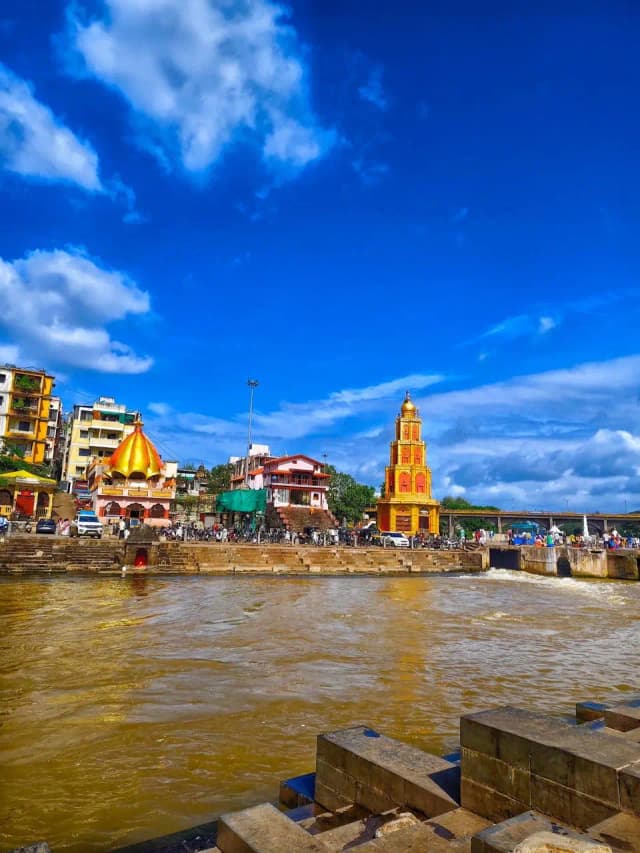
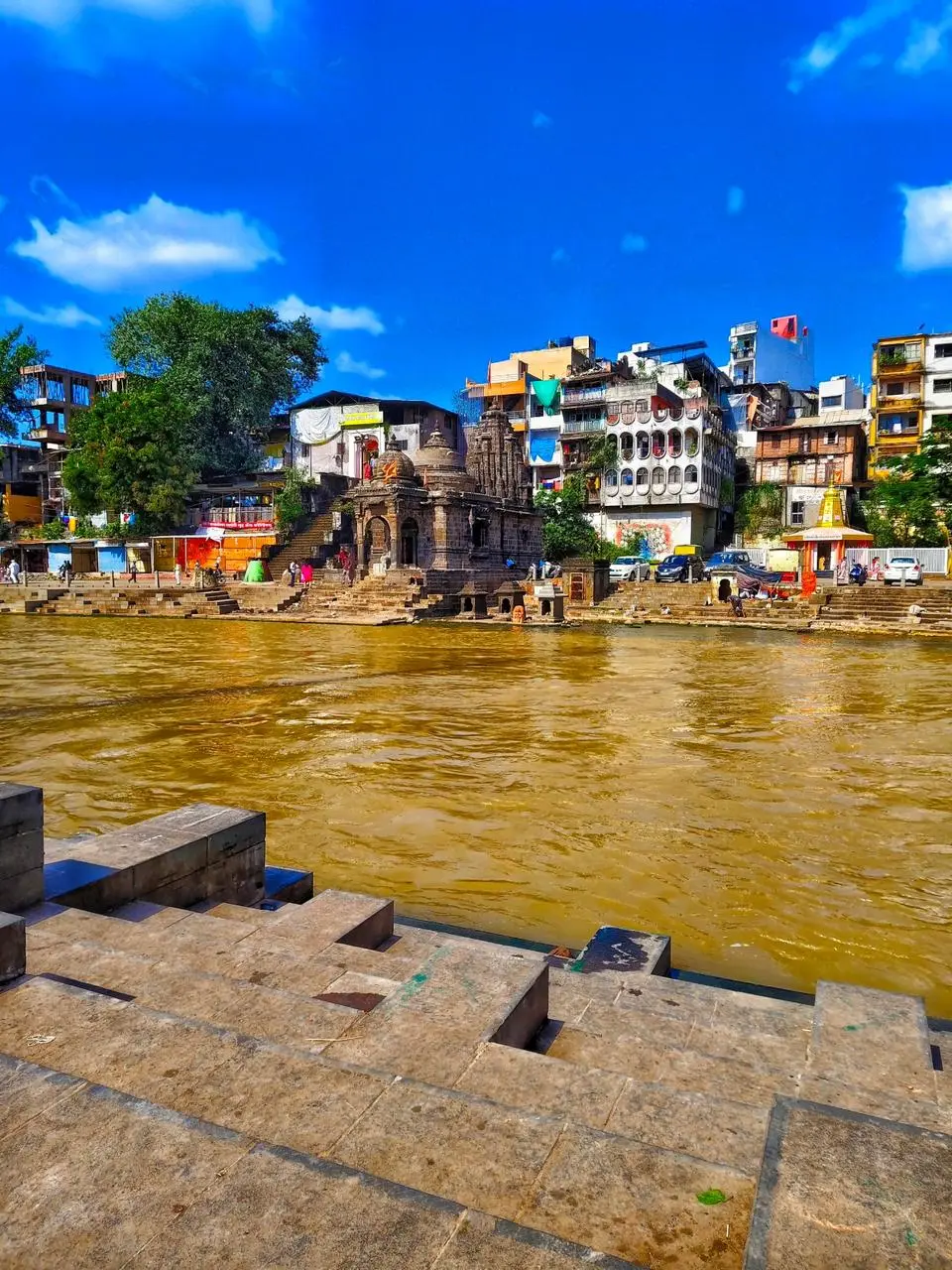
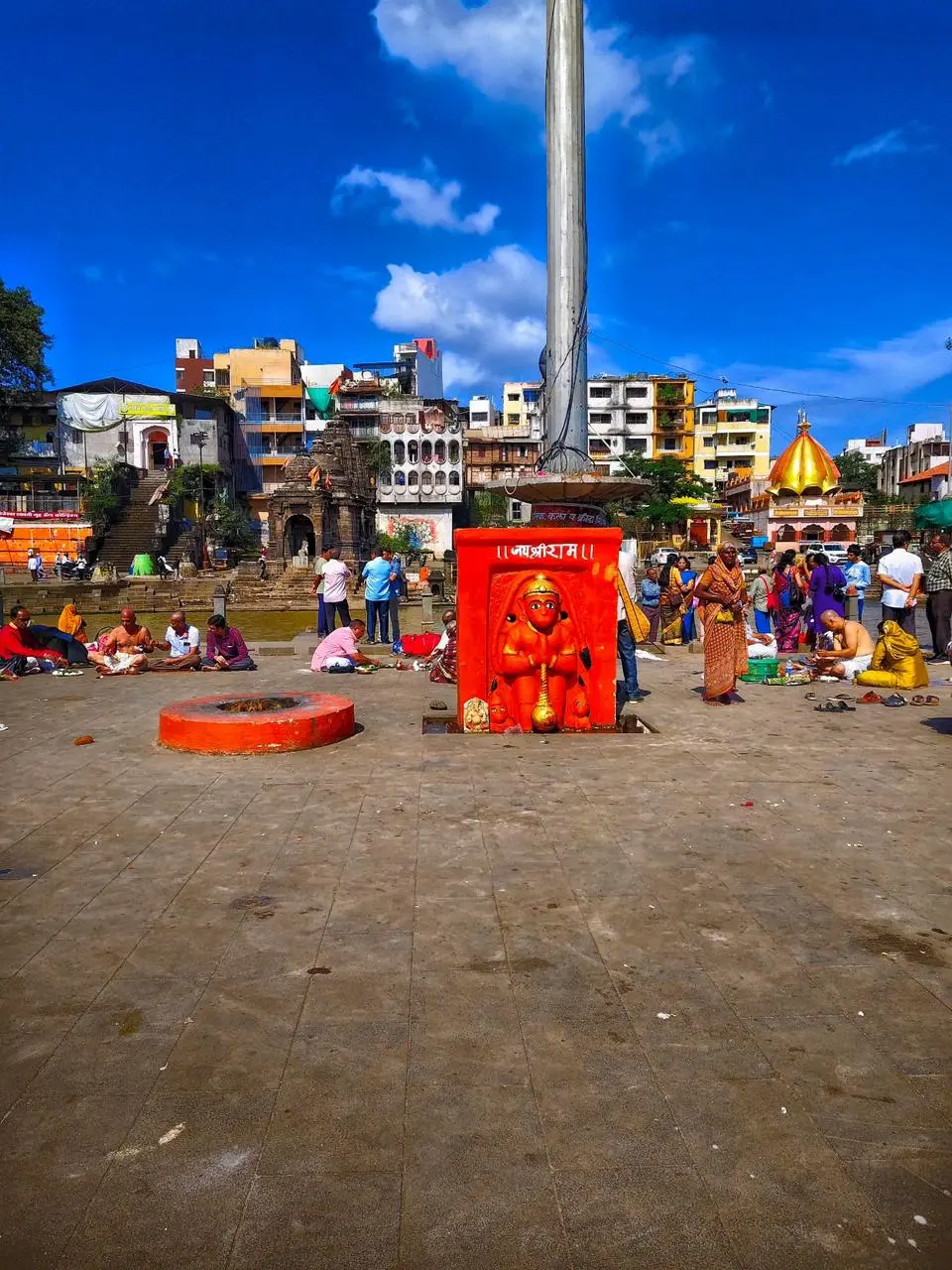
Ramkund is the central bathing ghat situated on the Godavari in Nashik. It holds major religious importance due to its direct connection with the Ramayana. According to tradition, Lord Rama and Sita lived in the nearby Panchavati area during their exile and bathed in these waters.
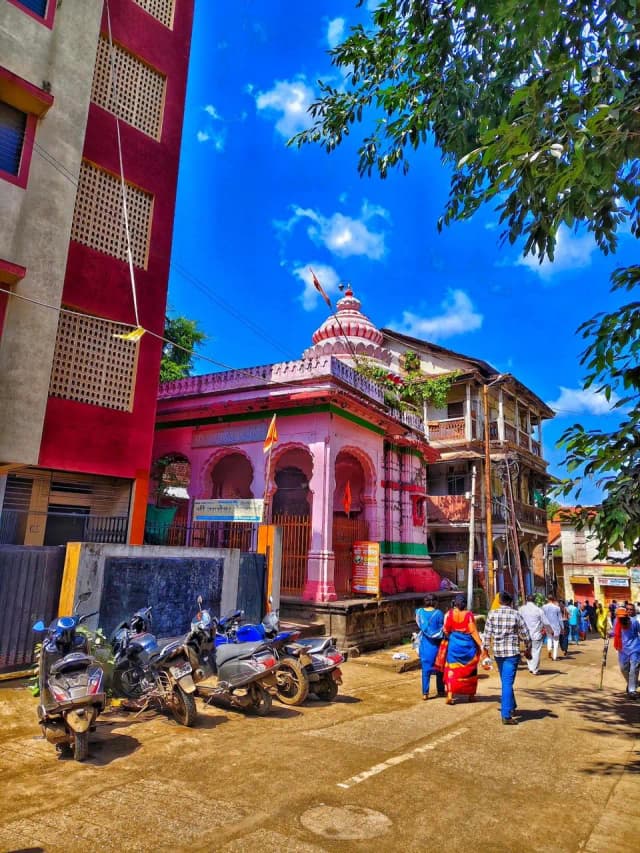
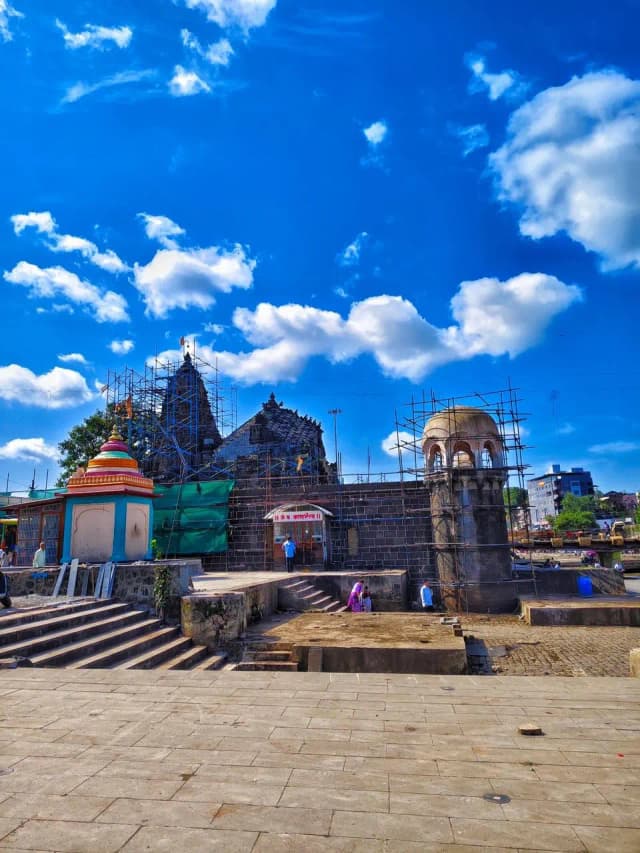
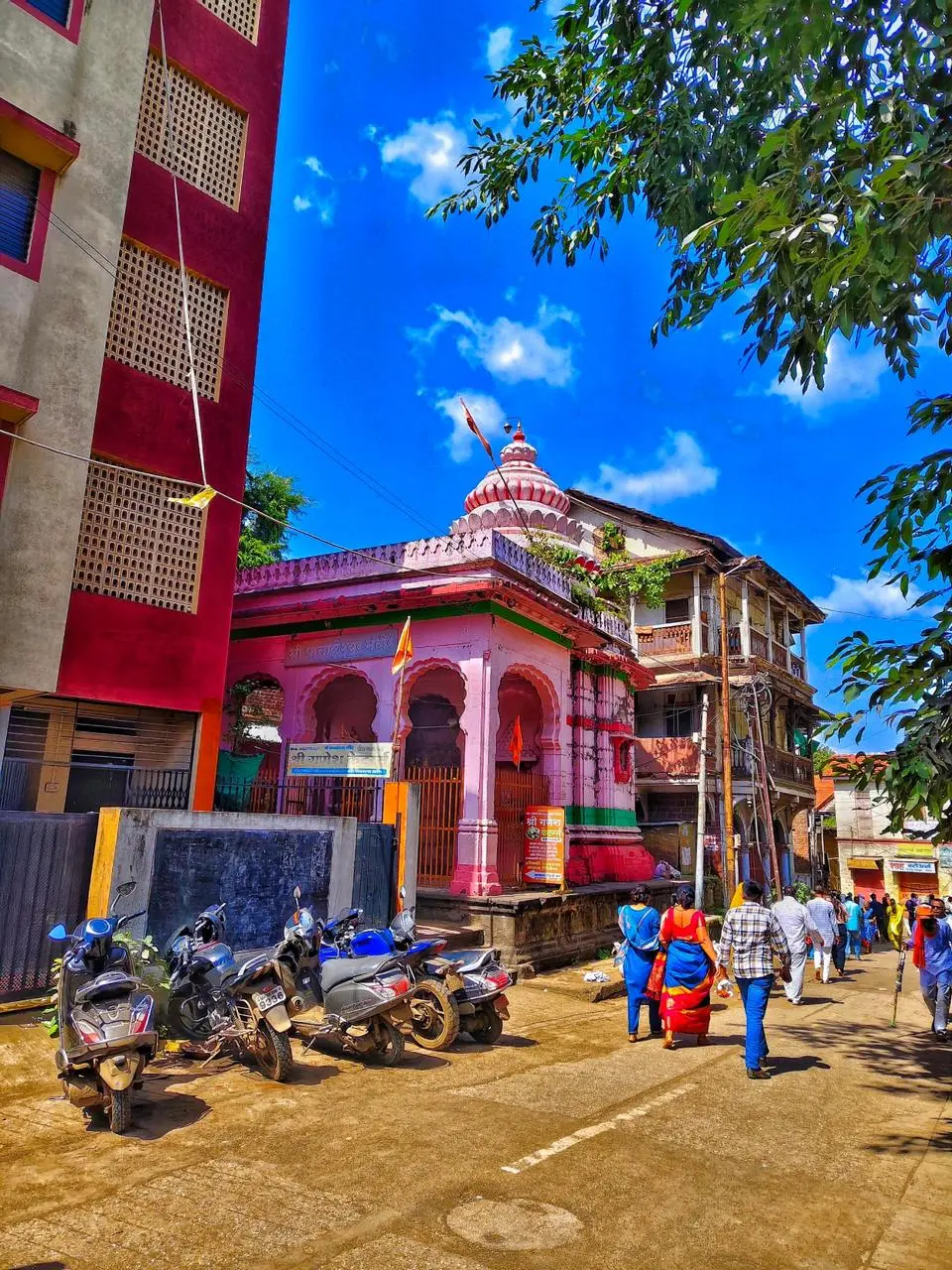
During the Kumbh, Ramkund is the main location for the ceremonial baths. The surrounding Panchavati area is home to numerous other religious sites, including the Kalaram Temple and Sita Gufa (Sita's Cave).
Explore important Kumbh places →
Trimbakeshwar and Kushavarta
Trimbakeshwar is a sacred town situated near the Brahmagiri mountain. It is home to the Trimbakeshwar Temple, which is one of the twelve Jyotirlinga shrines dedicated to Lord Shiva.
The Kushavarta Kund is a large, sacred pool in the center of the town. During the Kumbh, it serves as the main bathing location for pilgrims and ascetics on the Trimbakeshwar side of the festival.
The Godavari and the Kumbh
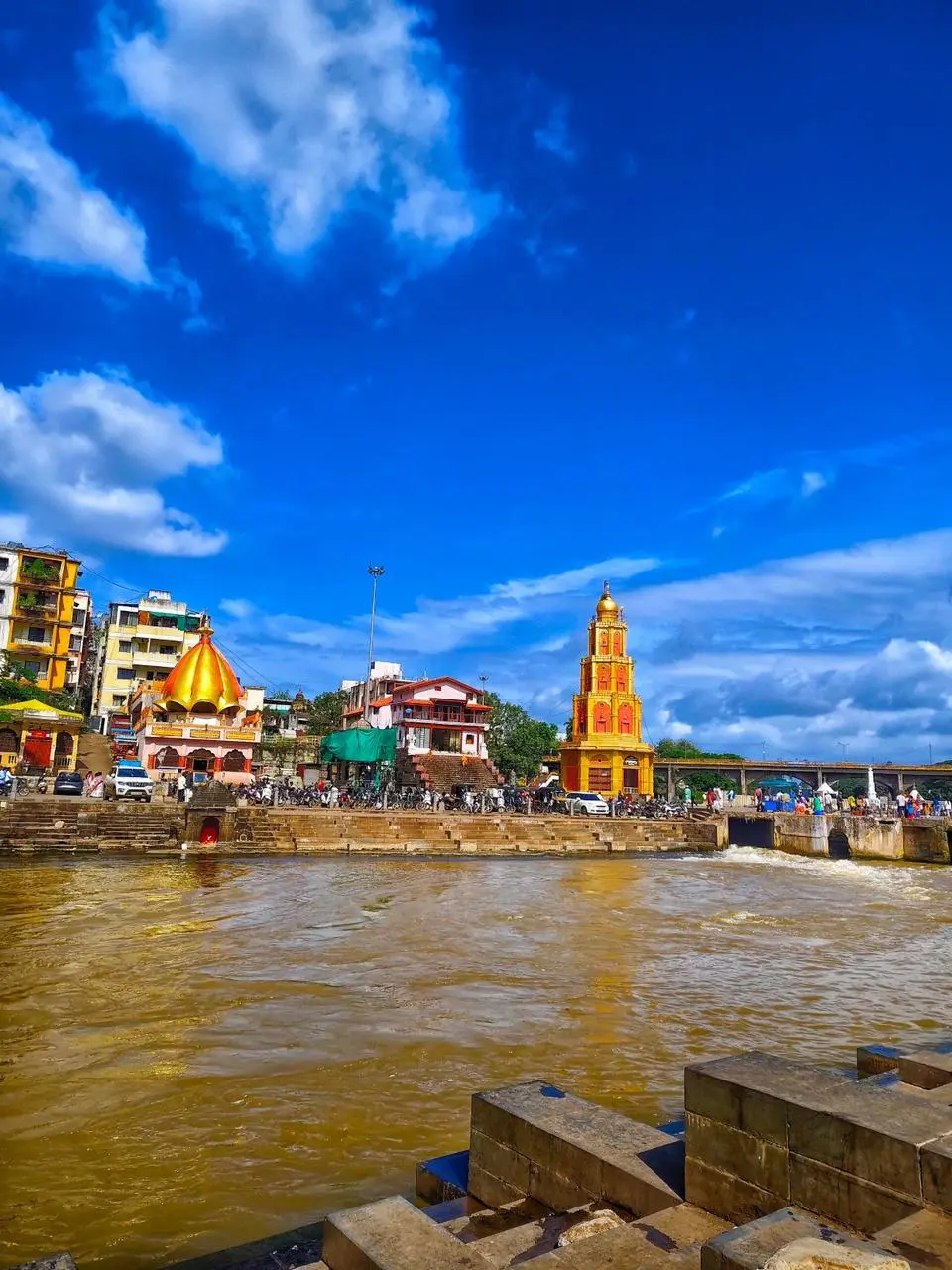
The Godavari is central to the Nashik Kumbh. Geographically, the river originates in the Western Ghats near Trimbakeshwar and flows through Nashik.
According to Hindu tradition, the Brahmagiri mountain is the divine source where the river was brought to earth by the sage Gautama. The bathing rituals that form the core of the Kumbh Mela are entirely centered on the Godavari, specifically at Kushavarta Kund and Ramkund.
Akhadas and the Kumbh
Akhadas are traditional orders or sects of ascetics and sadhus. During the Kumbh Mela, they set up large temporary camps.
A major part of the event is the processions, known as Peshwai, led by the Akhadas as they march toward the river for their ceremonial bathing. In Nashik-Trimbakeshwar, there is a clear historical distinction: the Shaiva Akhadas gather and bathe at Trimbakeshwar, while the Vaishnava Akhadas gather and bathe at Ramkund in Nashik.
Mythological background
According to Hindu tradition, the origin of the Kumbh Mela traces back to the Samudra Manthan—the churning of the ocean by gods and demons to extract the nectar of immortality (Amrit).
In Hindu mythology, during a struggle for the pot (Kumbh) containing the nectar, drops of the Amrit fell at four locations on Earth: Prayagraj, Haridwar, Ujjain, and Nashik. This belief forms the spiritual foundation for gathering at these four specific cities.
Nashik Kumbh Mela 2027
The next Simhastha Kumbh Mela at Nashik–Trimbakeshwar will take place in 2027. The official planning is handled by the Nashik–Trimbakeshwar Kumbh Mela Authority (NTKMA).
The event will officially begin with the Dhwajarohan (flag hoisting) ceremony in late 2026, leading up to the main bathing period in the late summer and monsoon months of 2027.
See the complete Kumbh calendar →
What makes Nashik Kumbh different?
The Nashik Kumbh is defined by its two-centre structure. The simultaneous observances across Nashik and Trimbakeshwar cater to different Akhada traditions. Because it centers around two distinct bathing sites—Ramkund and Kushavarta—the Simhastha Kumbh offers a dual experience tied together by the Godavari.
Important places
Ramkund
The central bathing ghat on the Godavari in Nashik.
Panchavati
The historic area surrounding Ramkund, associated with Lord Rama.
Trimbakeshwar Temple
One of the twelve Jyotirlinga shrines dedicated to Lord Shiva.
Kushavarta Kund
The central bathing pool for pilgrims in Trimbakeshwar.
Brahmagiri
The sacred mountain and traditional source of the Godavari.
Frequently Asked Questions
What is Nashik Kumbh Mela?
It is a major religious gathering and pilgrimage that takes place across Nashik and Trimbakeshwar, centered around taking a holy dip in the Godavari river.
Why is Nashik Kumbh called Simhastha?
It is called Simhastha because the festival is held when the planet Jupiter enters the zodiac sign of Leo (Simha).
How often is Nashik Kumbh held?
The Kumbh Mela in Nashik is held once every 12 years, following an astronomical cycle.
Where is Nashik Kumbh Mela held?
It is held in the state of Maharashtra, India, across two major centres: Nashik city and the nearby town of Trimbakeshwar.
What is the difference between Nashik and Trimbakeshwar during Kumbh?
Both locations are situated on the Godavari river and jointly host the event. Trimbakeshwar primarily hosts the Shaiva traditions, while Nashik hosts the Vaishnava traditions.
What is Ramkund?
Ramkund is the main bathing ghat on the Godavari in Nashik, serving as the focal point for ceremonial baths.
What is Kushavarta Kund?
Kushavarta Kund is a large, sacred pool in Trimbakeshwar where pilgrims and ascetics perform their holy baths.
When is Nashik Kumbh Mela 2027?
The official ceremonies begin in late 2026, with the primary bathing events (Amrit Snan) scheduled for August and September of 2027.
Nashik Kumbh Mela 2027 is coming soon.
Get ready for Kumbh.